
Natural, Safe Dry Needling in Crown Point, IN
Happily serving patients from Cedar Lake, Hobart, Merrillville, St. John, Schererville, Hebron, and the surrounding areas.
Some pain refuses to respond to rest. Some injuries keep coming back, no matter how many times you treat them. And some muscles stay locked up no matter how much you stretch.
When conventional approaches fall short, dry needling offers a clinically effective path to relief that goes deeper than surface-level treatment.
At Sherwood Spine & Sport, dry needling is one of the most powerful tools in our clinical toolkit.
We use it to release trigger points, restore normal muscle function, and accelerate healing in ways that hands-on treatment alone cannot always achieve.
Whether you’re an athlete dealing with overuse injuries, a desk worker with chronic neck and shoulder tension, or a golfer trying to free up restricted muscles that are limiting your swing, dry needling may be exactly what your recovery has been missing.
Are you a good candidate? Let’s talk.
What Is Dry Needling?
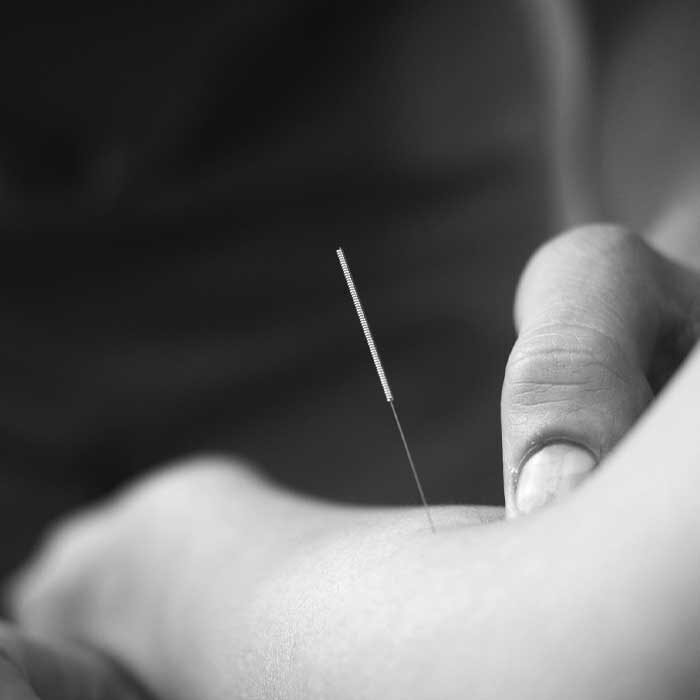
Dry needling is a therapeutic technique in which thin, solid monofilament needles are inserted directly into muscle tissue, trigger points, or areas of soft-tissue dysfunction. The therapy serves to reduce pain and restore normal function.
The term "dry" means that no injection is performed. There is no medication, no solution, and no substance of any kind put in the body. The needle itself is the treatment.
The technique targets myofascial trigger points, which are tight, hypersensitive bands within muscle fibers that cause local pain, referred pain, restricted movement, and weakness. Trigger points develop in response to injury, overuse, poor posture, chronic stress, and repetitive movement patterns. They are remarkably common and are a frequently overlooked contributor to both acute and chronic pain conditions.
Dry needling is a skill-based clinical procedure performed by trained healthcare providers. At our Crown Point chiropractic office, it’s often integrated into a comprehensive care plan alongside adjustments, rehab, and corrective exercise.
Frequently Asked Questions About Dry Needling
What does dry needling do?
Dry needling deactivates trigger points, reduces local and referred pain, restores normal muscle length and function, and promotes circulation and tissue healing in the treated area. It also alters the nervous system in ways that help interrupt chronic pain cycles that have become self-reinforcing over time.
Many patients notice a significant reduction in pain and tension after just one to two sessions, and outcomes continue to improve when it is combined with other treatments.
How does dry needling work?
When a needle is inserted into an active trigger point, it often produces a brief involuntary twitch response in the muscle. That twitch is a good sign. It indicates that the tight band of muscle has been stimulated and is beginning to release.
The mechanical stimulation of the needle also increases blood flow to the area, promotes the release of natural pain-relieving chemicals, and alerts the nervous system to reset the muscle's normal resting tone. The result is reduced tension, improved mobility, and less pain.
Are dry needling and acupuncture the same thing?
They use similar needles, but they are not the same thing. Acupuncture is rooted in traditional Chinese medicine.
Dry needling is grounded entirely in Western medicine. It targets specific, identifiable structures within muscle tissue, primarily trigger points, based on a clinical diagnosis of musculoskeletal dysfunction.
The philosophy, training, and application are fundamentally different, even though both use thin needles as their primary tool.
Does dry needling hurt?
Most patients are surprised by how little discomfort the actual needle insertion causes. The needles used are extremely thin, far smaller than a hypodermic needle, and most people barely feel them going in.
The twitch response, when it occurs, can produce a brief cramping or aching sensation that lasts only a second or two. Some patients describe a deep pressure or heaviness in the treated muscle during the session.
After treatment, it is normal to feel some muscle soreness for a day or two, similar to what you might feel after a hard workout. That soreness is a sign that the tissue is responding and healing.
What is a dry needling appointment like?
Your first dry needling session begins with a brief review of your current symptoms and a physical assessment of the areas being treated.
Once we identify the target tissues, you will lie comfortably on the treatment table. The needles are inserted quickly and with precision, and many are left in place for a short period to allow the tissue to respond fully.
Sessions typically last 20 minutes, depending on how many areas are being treated.
Afterward, we often follow up with an adjustment to maximize the session's effects and provide take-home exercises. Most patients leave feeling noticeably looser and less painful than when they walked in.
Is dry needling safe?
Yes. When performed by a trained clinician, dry needling has an excellent safety record. It’s a widely used technique in chiropractic and physical therapy practices across the country, and serious adverse events are rare.
The most common side effects are temporary muscle soreness and occasional minor bruising at the needle site.
Dr. Sherwood follows strict clean-needle protocols and sterile practices for every patient, every time. As with any clinical procedure, we conduct a thorough intake and screening process to confirm that dry needling is appropriate for you before proceeding.
Why Choose Sherwood Spine & Sport for Dry Needling in Crown Point
Dry needling isn’t usually a standalone solution; it works best when part of a chiropractic care plan that addresses the full picture of your pain, including joint restrictions, movement dysfunction, strength deficits, and the habits and patterns that allowed the problem to develop in the first place.
At Sherwood Spine & Sport, dry needling is always delivered in context. We assess you thoroughly, identify contributing factors, and build a plan that strategically uses dry needling alongside our full range of chiropractic and rehabilitative services.
Our patients benefit from a comprehensive approach that includes:
- Chiropractic adjustments using manual manipulation, drop table technique, flexion distraction, and Sacro Occipital Technique (SOT)
- Sports chiropractic care and injury rehabilitation
- Golf mobility assessment and golf-specific injury rehabilitation
- Therapeutic exercise and corrective movement programming
- Visceral manipulation for chronic pain and organ mobility
- Neural manipulation for nerve health
- Selective Functional Movement Assessment (SFMA) for root-cause movement analysis
When these tools are used together, the results are consistently better than any single treatment could produce.
Dry needling frees up the tissue. Adjustments restore joint motion. Rehabilitation rebuilds the strength and stability that keep the problem from returning. That is the Sherwood Spine & Sport approach, and it is the difference between short-term relief and lasting change.
If you’ve been living with muscle pain, chronic tension, or an injury that keeps coming back, dry needling may be the missing piece. We would love to help you find out.